The short answer
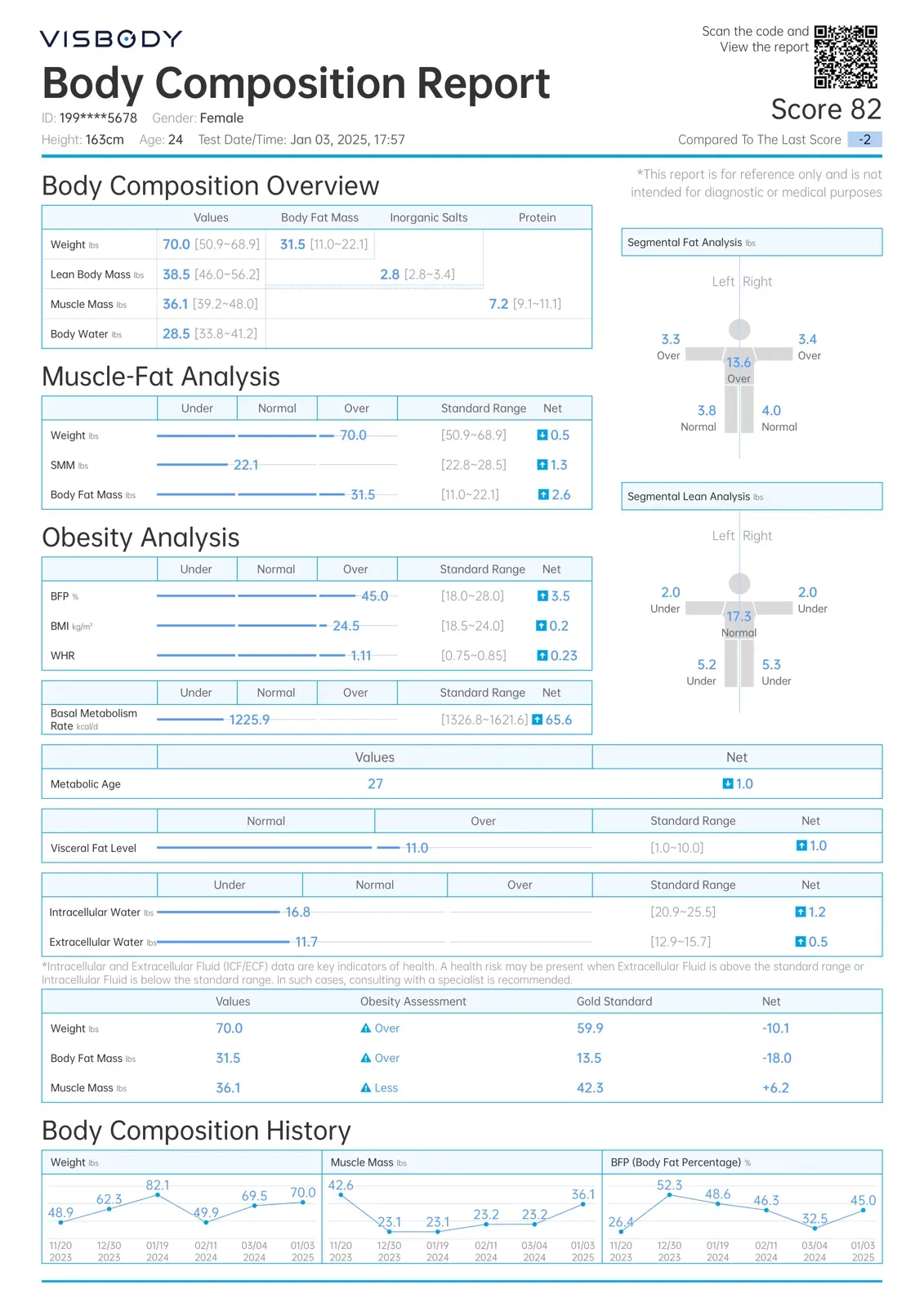
BIA passes a small electrical current through the body and reads the impedance to estimate composition. A 3D optical scan captures the shape of the body to give posture, circumferences and a model. DEXA is a clinical reference method that uses X-ray absorptiometry; Visbody does not offer it.
Side by side
| BIA | 3D optical scan | DEXA | |
|---|---|---|---|
| What it is | Electrical impedance measurement | Depth or camera capture of body shape | X-ray absorptiometry |
| Typical outputs | Fat, muscle, water, segmental values | Posture, circumferences, 3D model | Clinical composition measurement |
| Typical setting | Gyms, clinics, studios | Gyms, studios, clinics | Clinical or research settings |
| Offered by Visbody | Yes, 8 electrodes | Yes, optical 3D capture | No |

Strengths and limits
- BIA is quick and non-invasive. Results can be influenced by factors such as hydration, so conditions should be consistent between tests.
- 3D optical scans make progress visible and show posture and circumferences. Composition from shape alone is an estimate.
- DEXA is used as a clinical reference. It requires clinical equipment and is not a drop-in tool for a club.
Why combine methods
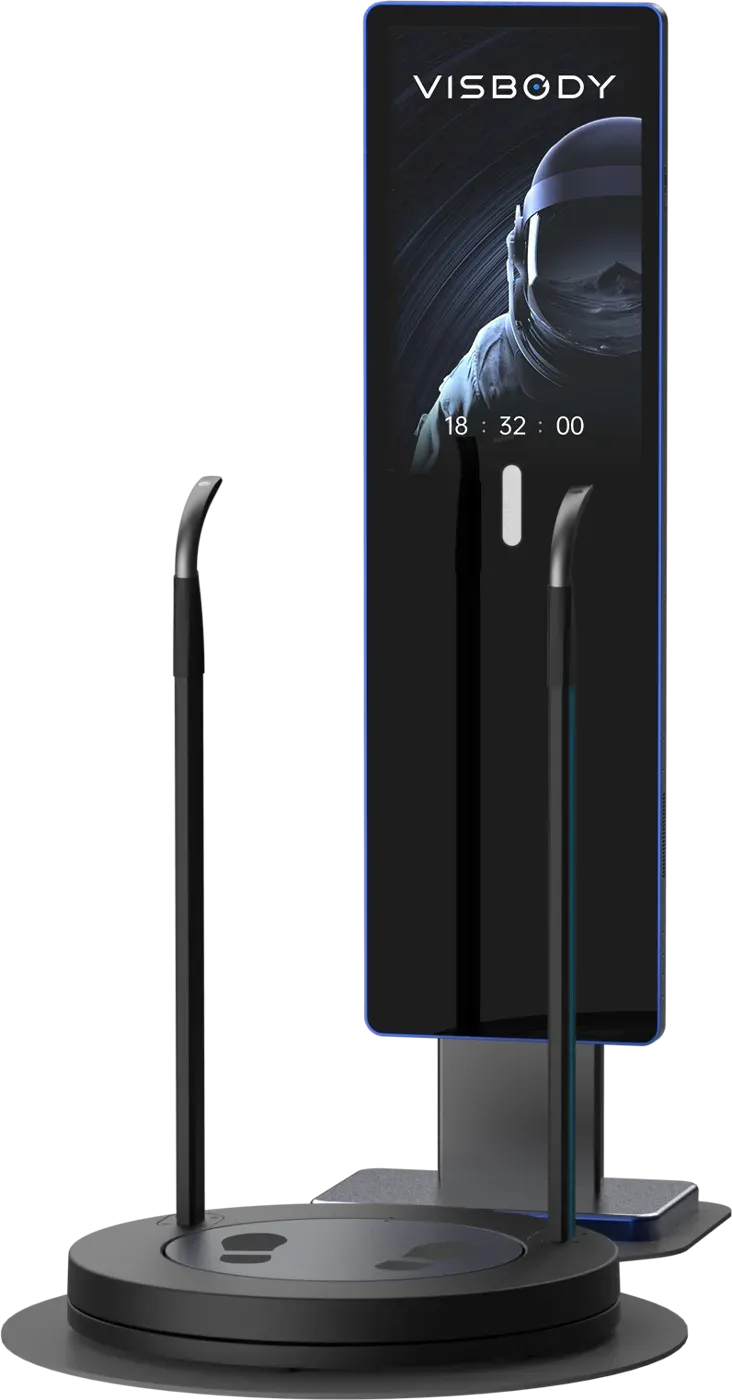
Visbody M60 and M50 combine 8-electrode BIA with optical 3D capture. The M60 states 4 frequencies (5/50/250/500 kHz). The T55 adds AI movement screening and fitness tests. Reports are for reference, not a medical diagnosis.