
How a 3D body scanner works
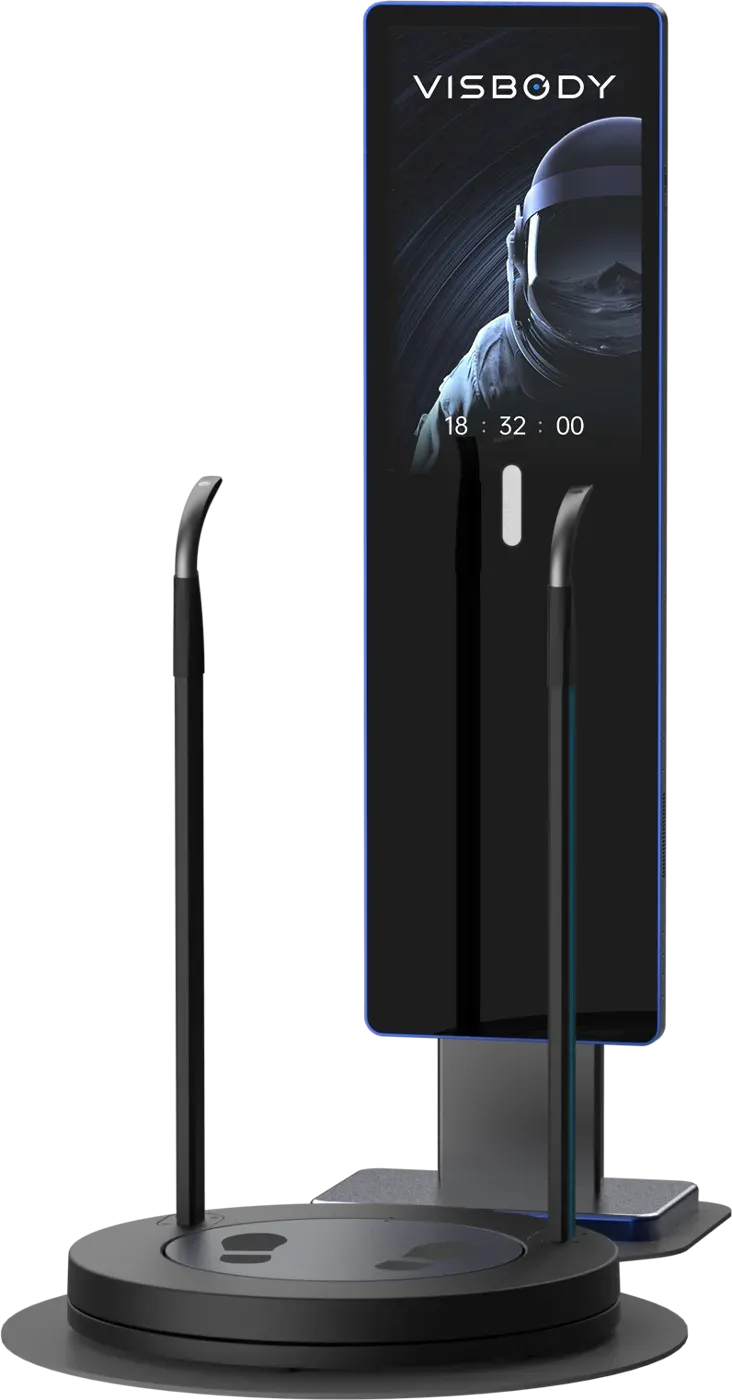
Cameras or depth sensors capture the body from several sides while the client stands still or on a rotating platform. Software rebuilds the shape as a 3D model and takes measurements from it.
What it can measure
- Posture: alignment such as head position, shoulder height and pelvic tilt.
- Circumferences: waist, hips, chest, arms and legs, taken automatically.
- A 3D body model: a visual record of the body at one moment.
- Progress: scans side by side, scan after scan.
What it does not do
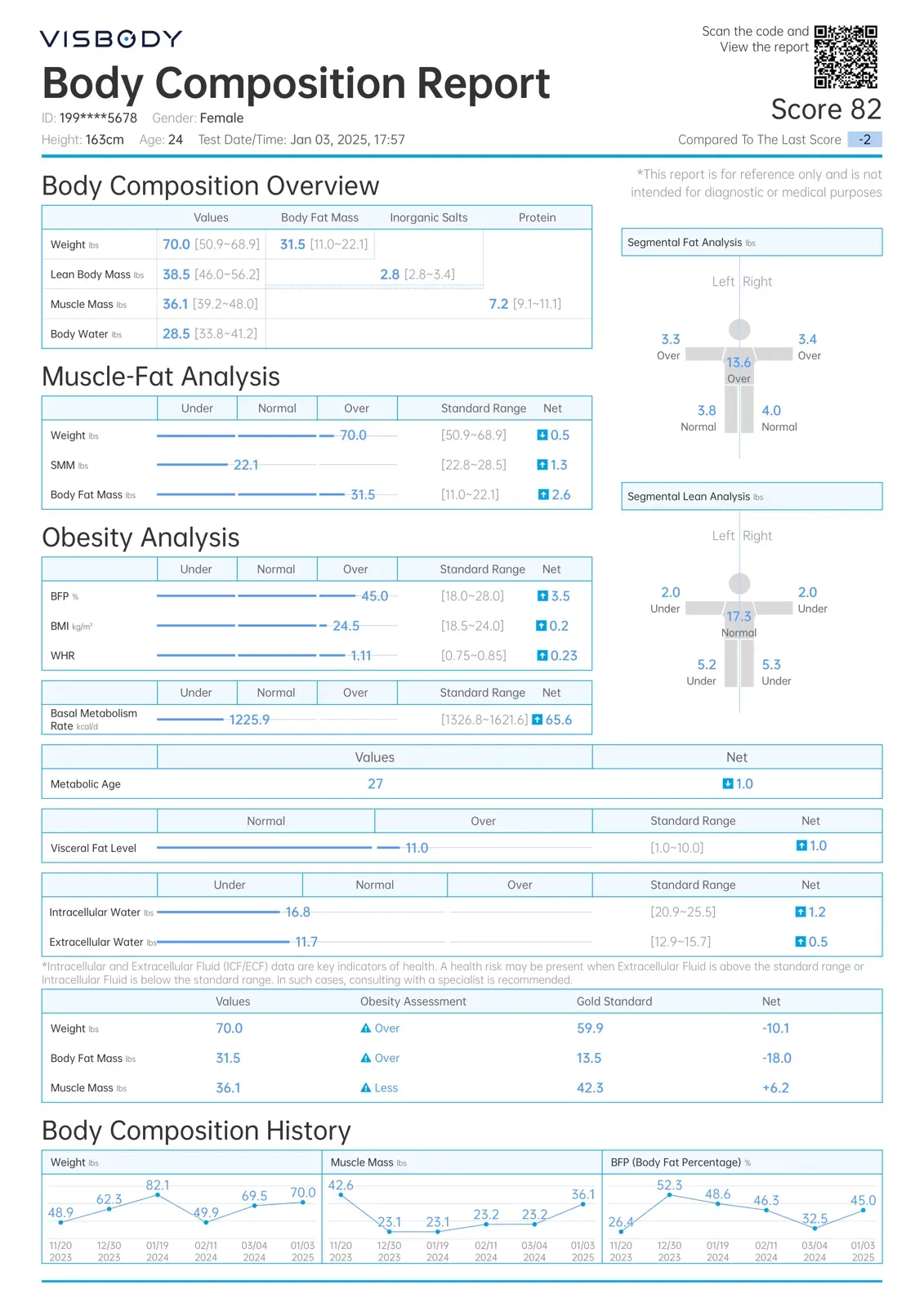
A 3D scan reads shape. Composition from shape alone is an estimate, and a scan is not a medical diagnosis. Visbody reports are for reference, not a medical diagnosis, and do not replace professional judgement.
How Visbody does it
Visbody M60 and T55 combine optical 3D capture on a turntable with 8-electrode body composition in the same device. The M50 has a mirror touchscreen with gesture control. The T55 adds AI movement screening and physical fitness tests.
Who uses one
- Gyms and fitness clubs, for onboarding and progress scans.
- PT and yoga or pilates studios, for a clear starting point and follow-up.
- Physio and rehab clinics, for a shared reference in conversations with patients.
- Weight management and wellness businesses, for regular progress checks.