
Side by side
| DEXA | BIA | 3D scan | |
|---|---|---|---|
| Method | Low-dose X-ray absorptiometry | Small electrical current through electrodes | Optical 3D capture |
| Typical setting | Medical or specialist site | Clinic, gym or studio | Clinic, gym or studio |
| What it adds | Bone and regional composition | Fat, muscle and water, by segment | Posture and circumferences |
| Repeating it | Depends on access and cost | Quick to repeat | Quick to repeat |
What each is good for
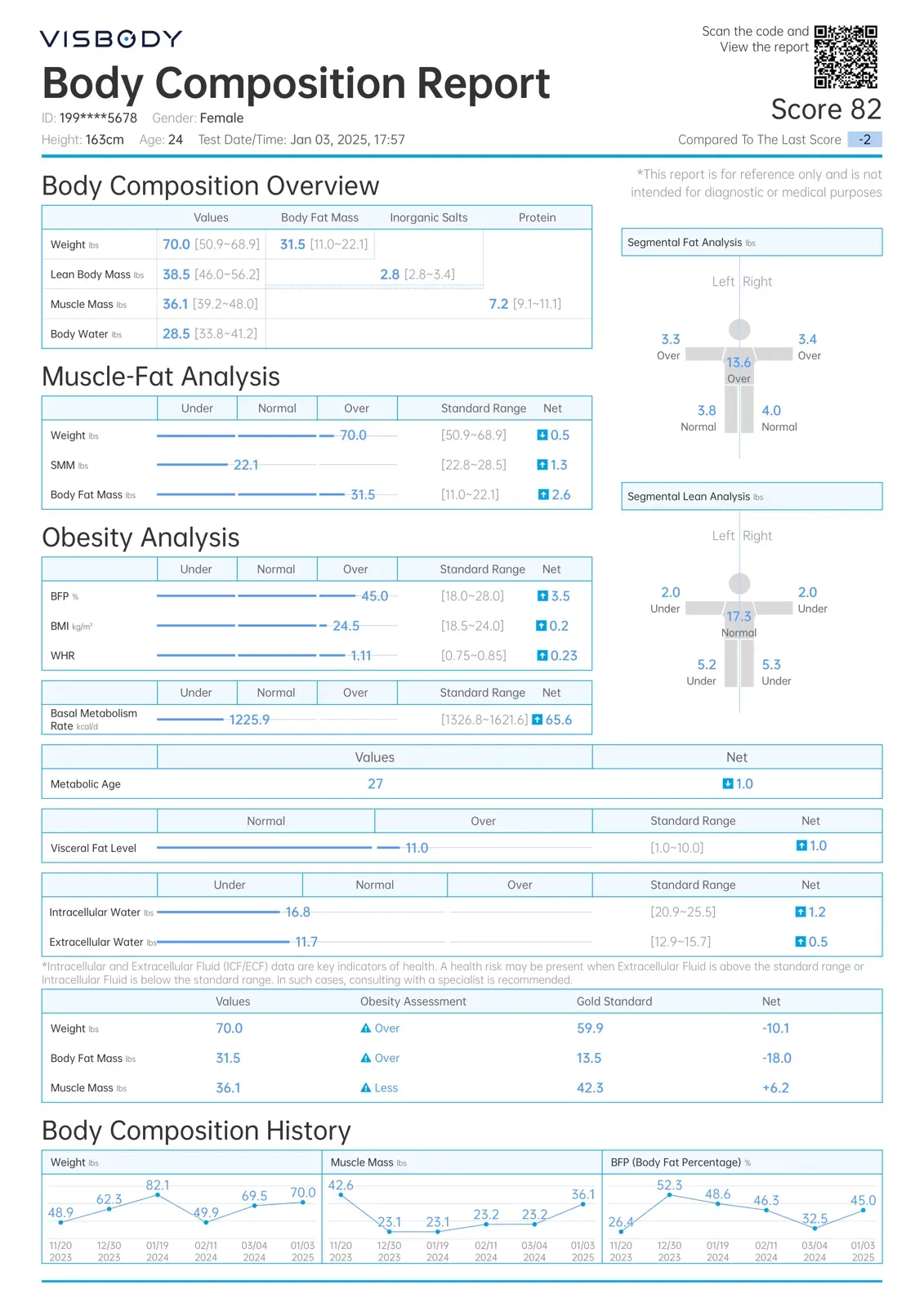
DEXA is often used when a bone or regional composition read-out is wanted. BIA and 3D scanning suit regular check-ins because they are quick and can be repeated every 12 weeks. Visbody combines 8-electrode BIA with a 3D scan in one session.
Consistency beats a single number
Whatever the method, repeat it under similar conditions: same time of day, hydration and clothing. The trend over time matters more than one reading. Reports are for reference, not a medical diagnosis.
Read more
For a wider comparison of the three methods, see our guide to BIA, 3D body scanning and DEXA.
Measure this in your business
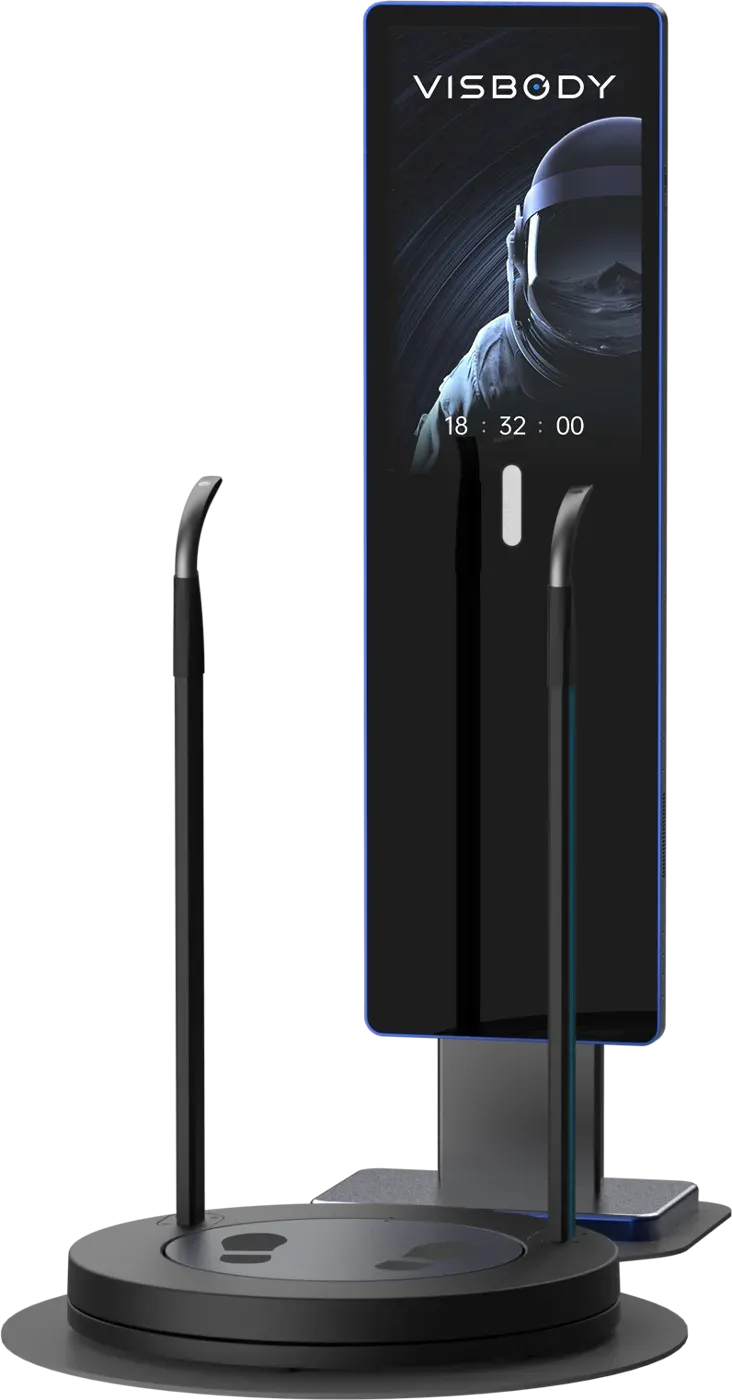
- Entry modelVisbody M503D Intelligent Body Assessment Mirror.From €199 per month
- Mid-rangeVisbody M60The ultimate health assessment device.From €299 per month
- Premium flagshipVisbody T55The ultimate health & fitness assessment device.From €399 per month
Lease based on 60 months, subject to financing approval. Excl. VAT.